Supported Hardware Platforms and Technical Architecture
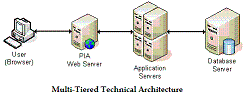
Phire Architect is built on PeopleTools and utilizes the Pure Internet Architecture (PIA) of PeopleSoft applications
which is a multi-tiered architecture that consists of a Web Werver which communicates to an Application Server
which utilizes messaging to issue SQL calls to the relational database. Here is the diagram that depicts this
architecture:
Phire Architect must be installed onto a database containing PeopleTools. You have the choice of installing
Architect to any existing PeopleSoft Application (shared) or creating a new PeopleTools-Only database (dedicated).
The shared option allows you to leverage existing infrastructure. The dedicated option requires you to build and
maintain dedicated components for Phire such as a database, application server, web server, and process
scheduler.
2. What kind of footprint does Phire Architect leave on the database where it is installed?
Installation of Phire Architect involves importing a PeopleTools project, execution of few DMS scripts, SQL scripts,
and manual online tasks. The Phire PeopleTools project contains approximately 2000 objects that are easily
distinguished from the PeopleSoft delivered objects by the “PHI” prefix in the name. Majority of the Phire Architect
transactional data is stored in about dozen tables and require very little disk space and alll the setup data for Phire
fits in less than 20 MB of disk space. Actual disk space requirements will depend on transactional volume; one of
our clients report that one year of Phire Architect data requires less than 500 MB of disk space.
3. Which hardware platforms does Phire Architect support?
The list of hardware platforms supported by Phire is identical to that of PeopleSoft because the technical
architecture of a Phire application is identical to that of PeopleSoft. Phire runs on the same web servers,
application servers, and database servers as PeopleSoft and we do not require any new infrastructure or third party
software. Phire Architect can reside in your existing PeopleSoft application such as Financials, HCM, CRM, or
EPM. Alternatively, you have the other option to install Phire Architect on a stand-alone PeopleTools-Only
database.
4. What is the minimum and latest version of PeopleTools supported?
The Phire Architect application requires at least PeopleTools 8.40. Phire supports all the latest version of
PeopleTools including 8.49.x.
5. How soon after a new version of PeopleTools is released by PeopleSoft is it supported by Phire?
In most cases, Phire certifies the new version of PeopleTools prior to the release of the new version to the general
public by Oracle corporation. Our goal at Phire is to certify new versions of PeopleTools within 4 weeks of release
by Oracle.
6. We want to install Phire on a stand-alone database, what version of PeopleTools should we install on?
If Phire is installed on a central, stand-alone instance, there are no dependence on which version of PeopleTools
to use as long as it is at least 8.40 and above. The PeopleTools version of Phire is NOT dependent on the
PeopleTools version of your existing PeopleSoft applications. However, for maintenance reasons it is
recommended that you install Phire on the highest PeopleTools release currently deployed in your environment.
7. What needs to be done in Phire Architect if we upgrade the PeopleTools version of one of our PeopleSoft
applications?
You are not required to upgrade Phire's PeopleTools version when you upgrade PeopleTools for your PeopleSoft
applications (see answer #6). There are two things that are required when you upgrade PeopleTools for your
existing PeopleSoft application: 1) upload new Phire metadata into Phire Architect (delivered as a datamover
script) and 2) run a set of SQL scripts to create and/or alter Phire version repository tables. That is it.
Company
Phire was conceived in early 2003 by a group of experienced PeopleSoft professionals who saw a need for an ACM
solution built using PeopleTools. Design for the Phire Architect application started immediately and the initial
development was completed in July 2005. After months of beta testing, Phire went live with the first production
customer in early 2006. We now have customers who have deployed Phire to thousands of end users with some
customers having successfully performed 1000+ PeopleSoft migrations using Phire Architect.
2. How is Phire funded?
Phire is a privately owned Commonwealth of Virginia corporation. Initial funding was provided by the founding
members and additional funding has been received from private investors. Phire currently holds no debt and has
achieved and maintained profitability since early 2007.
3. Where is Phire located?
Phire’s headquarter is located in Northern Virginia, few miles outside of Washington D.C. in Fairfax county.
Our mailing address is:
Phire, Inc.
P.O. Box 9053
McLean, VA 22102
4. Who are some of your clients and contacts for references?
Phire has blue chip clients in both government and commercial sectors across multiple industries. Some of the
Phire clients include: Accenture, Department of State, Cogentrix, Aptuit, State of Texas, and Amerigroup. We
provide customer references upon request.
Software License and Maintenance Pricing
1. What are the licensing options available?
There are two types of software licenses offered by Phire: Enterprise and Project License. Enterprise license is a
perpetual license that provides unlimited number of users and installations. Project-based license is for a named
project for a pre-defined duration.
2. What is the approximate ballpark cost of the Phire Architect software license?
We provide price quotes upon request after few discovery questions are answered. Final pricing depends on the
type of license sought and the specific terms of the license agreement. Generally, Phire Architect is very cost
effective as compared to other Enterprise Application Change Management solutions.
3. What type of Support Plan is available?
Phire offers annual software maintenance and support plan that covers all the enhancements, fixes, bundles, and
future upgrade releases of Phire Architect. Customers can report incidents via our "800" support number, via our
customer web site, or by creating a ticket to the PHIRE domain on the customer's own installation of Phire Architect.
4. How is the annual maintenance and support cost calculated?
The cost of the annual maintenance and support plan is based on a percentage of the license fee. Generally, our
annual maintenance fees are very cost effective as compared to our competitors.
Phire Architect is built on PeopleTools and utilizes the Pure Internet Architecture (PIA) of PeopleSoft applications
which is a multi-tiered architecture that consists of a Web Werver which communicates to an Application Server
which utilizes messaging to issue SQL calls to the relational database. Here is the diagram that depicts this
architecture:
Phire Architect must be installed onto a database containing PeopleTools. You have the choice of installing
Architect to any existing PeopleSoft Application (shared) or creating a new PeopleTools-Only database (dedicated).
The shared option allows you to leverage existing infrastructure. The dedicated option requires you to build and
maintain dedicated components for Phire such as a database, application server, web server, and process
scheduler.
2. What kind of footprint does Phire Architect leave on the database where it is installed?
Installation of Phire Architect involves importing a PeopleTools project, execution of few DMS scripts, SQL scripts,
and manual online tasks. The Phire PeopleTools project contains approximately 2000 objects that are easily
distinguished from the PeopleSoft delivered objects by the “PHI” prefix in the name. Majority of the Phire Architect
transactional data is stored in about dozen tables and require very little disk space and alll the setup data for Phire
fits in less than 20 MB of disk space. Actual disk space requirements will depend on transactional volume; one of
our clients report that one year of Phire Architect data requires less than 500 MB of disk space.
3. Which hardware platforms does Phire Architect support?
The list of hardware platforms supported by Phire is identical to that of PeopleSoft because the technical
architecture of a Phire application is identical to that of PeopleSoft. Phire runs on the same web servers,
application servers, and database servers as PeopleSoft and we do not require any new infrastructure or third party
software. Phire Architect can reside in your existing PeopleSoft application such as Financials, HCM, CRM, or
EPM. Alternatively, you have the other option to install Phire Architect on a stand-alone PeopleTools-Only
database.
4. What is the minimum and latest version of PeopleTools supported?
The Phire Architect application requires at least PeopleTools 8.40. Phire supports all the latest version of
PeopleTools including 8.49.x.
5. How soon after a new version of PeopleTools is released by PeopleSoft is it supported by Phire?
In most cases, Phire certifies the new version of PeopleTools prior to the release of the new version to the general
public by Oracle corporation. Our goal at Phire is to certify new versions of PeopleTools within 4 weeks of release
by Oracle.
6. We want to install Phire on a stand-alone database, what version of PeopleTools should we install on?
If Phire is installed on a central, stand-alone instance, there are no dependence on which version of PeopleTools
to use as long as it is at least 8.40 and above. The PeopleTools version of Phire is NOT dependent on the
PeopleTools version of your existing PeopleSoft applications. However, for maintenance reasons it is
recommended that you install Phire on the highest PeopleTools release currently deployed in your environment.
7. What needs to be done in Phire Architect if we upgrade the PeopleTools version of one of our PeopleSoft
applications?
You are not required to upgrade Phire's PeopleTools version when you upgrade PeopleTools for your PeopleSoft
applications (see answer #6). There are two things that are required when you upgrade PeopleTools for your
existing PeopleSoft application: 1) upload new Phire metadata into Phire Architect (delivered as a datamover
script) and 2) run a set of SQL scripts to create and/or alter Phire version repository tables. That is it.
Company
Phire was conceived in early 2003 by a group of experienced PeopleSoft professionals who saw a need for an ACM
solution built using PeopleTools. Design for the Phire Architect application started immediately and the initial
development was completed in July 2005. After months of beta testing, Phire went live with the first production
customer in early 2006. We now have customers who have deployed Phire to thousands of end users with some
customers having successfully performed 1000+ PeopleSoft migrations using Phire Architect.
2. How is Phire funded?
Phire is a privately owned Commonwealth of Virginia corporation. Initial funding was provided by the founding
members and additional funding has been received from private investors. Phire currently holds no debt and has
achieved and maintained profitability since early 2007.
3. Where is Phire located?
Phire’s headquarter is located in Northern Virginia, few miles outside of Washington D.C. in Fairfax county.
Our mailing address is:
Phire, Inc.
P.O. Box 9053
McLean, VA 22102
4. Who are some of your clients and contacts for references?
Phire has blue chip clients in both government and commercial sectors across multiple industries. Some of the
Phire clients include: Accenture, Department of State, Cogentrix, Aptuit, State of Texas, and Amerigroup. We
provide customer references upon request.
Software License and Maintenance Pricing
1. What are the licensing options available?
There are two types of software licenses offered by Phire: Enterprise and Project License. Enterprise license is a
perpetual license that provides unlimited number of users and installations. Project-based license is for a named
project for a pre-defined duration.
2. What is the approximate ballpark cost of the Phire Architect software license?
We provide price quotes upon request after few discovery questions are answered. Final pricing depends on the
type of license sought and the specific terms of the license agreement. Generally, Phire Architect is very cost
effective as compared to other Enterprise Application Change Management solutions.
3. What type of Support Plan is available?
Phire offers annual software maintenance and support plan that covers all the enhancements, fixes, bundles, and
future upgrade releases of Phire Architect. Customers can report incidents via our "800" support number, via our
customer web site, or by creating a ticket to the PHIRE domain on the customer's own installation of Phire Architect.
4. How is the annual maintenance and support cost calculated?
The cost of the annual maintenance and support plan is based on a percentage of the license fee. Generally, our
annual maintenance fees are very cost effective as compared to our competitors.
 |  |  |  |  |  |  |
| "The Only Thing Constant is Change." |
| ©2007 www.phire-soft.com | All Rights Reserved. |
| ____Frequently Asked Questions (FAQs) |